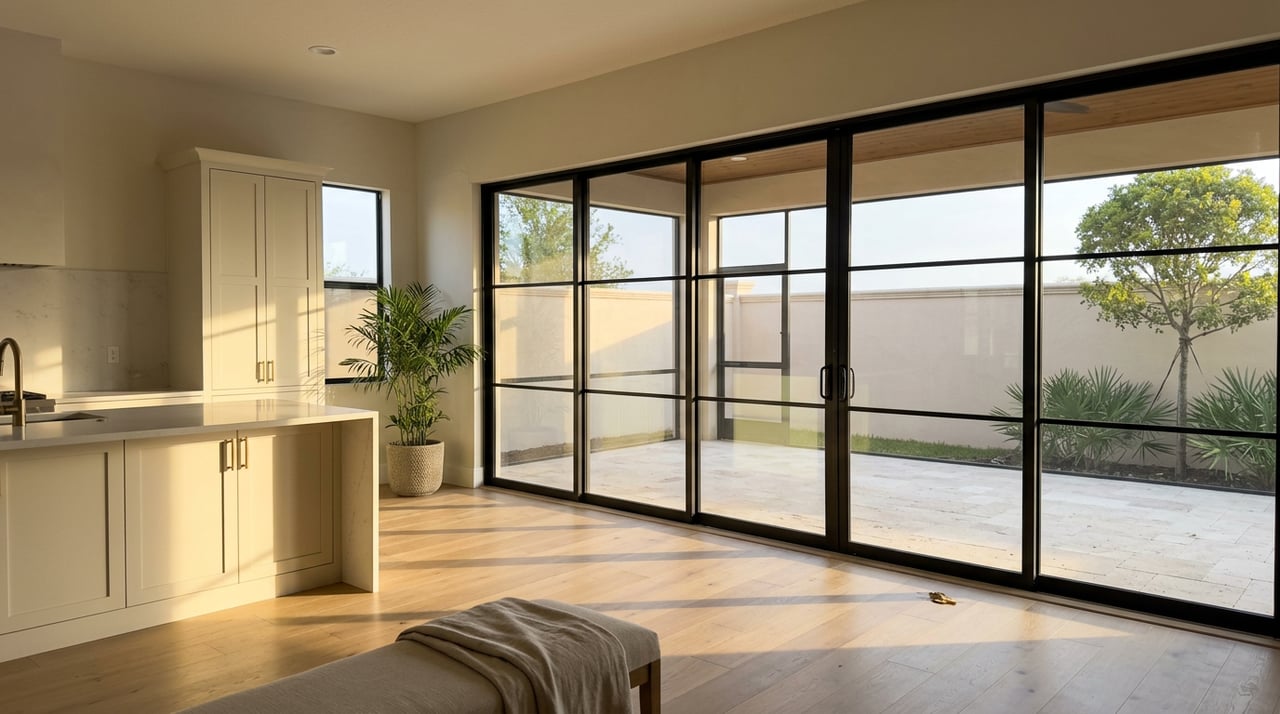
Riverview New Construction CDD Fees and Monthly Costs
August 20, 2026
August 20, 2026
A buyer touring Waterleaf and Creek Preserve last month found two homes priced within a few thousand dollars of each other, similar square footage, similar builder finishes. She assumed the monthly payment would land close too. It didn't. One community's combined HOA and CDD assessment ran nearly $250 a month before a dollar of mortgage, tax, or insurance. The other, a few miles away, ran closer to $185. Same price tag on the sign. Different bill in the mailbox.
This is the part Riverview's median price can't tell you, and it's the reason two homes that look identical on a listing sheet can carry monthly costs that diverge by more than the cost of a car payment. The gap isn't builder markup or lot premium. It's the Community Development District assessment, and in a market where the majority of new construction runs through a CDD, the fee structure matters more than the sticker.
A CDD is a special-purpose local government entity, created under Florida law, that issues bonds to pay for the roads, utilities, drainage, and amenities inside a new community. It's not optional and it's not the same as an HOA. The HOA enforces deed restrictions and covers common-area landscaping or gate maintenance. The CDD assessment is doing something different: it's retiring construction debt.
That assessment is actually two charges stacked together. One is the bond, or debt service, portion: an annual payment that disappears once the infrastructure debt is paid off. The other is operations and maintenance, which covers the ongoing cost of running what the CDD built, and that portion can rise with the annual budget. A community advertising a "low CDD" might just be further along in retiring its bonds. A brand-new phase almost never is.
In Florida, CDD charges appear as non-ad valorem assessments.
That distinction is why comparing two Riverview communities by HOA fee alone is close to useless. A lower HOA can still carry a heavier CDD. A higher HOA might include trash pickup or internet that quietly offsets another line item elsewhere.
Here's how the math breaks down in several of Riverview's active communities, based on published assessment charts and resident handbooks:
| Community | HOA | CDD (annual) | Combined monthly (HOA + CDD) |
|---|---|---|---|
| Waterleaf | $586/year | $1,644.95–$2,302.93 | roughly $186–$241 |
| Creek Preserve | varies by section | varies by lot | roughly $187–$250 |
| Boyette Park | varies by home type | $854.90–$1,779.90 | lower end of the range, home-type dependent |
| Boyette Springs | around $75/month | none | around $75 |
Boyette Springs, a DR Horton community built between 2015 and 2018 with homes priced from roughly $352,000 to $575,000, carries no CDD at all, which is part of why its HOA sits so much lower than the newer master-planned developments around it. Panther Trace, a gated South Riverview community that also offers non-gated sections, is worth the same scrutiny: ask for its specific assessment documents rather than assuming a gated address automatically means a heavier fee.
Then there's the small set of Riverview properties marketed specifically as CDD-free, like River Pointe, where the HOA covers common-area maintenance and trash without a separate infrastructure assessment, and Shadow Run, an older custom-home community near Lake Grady where several remaining lots carry no CDD and a comparatively low HOA. These aren't cheaper because the homes are worth less. They're cheaper to carry monthly because someone already paid off, or never took on, the infrastructure debt that newer developments are still servicing.
It's tempting to read that table and conclude the CDD-free options win. They don't automatically. Communities carrying a CDD are usually the ones with the resort-style pools, the fitness centers, the sports fields, and the newer schools built into the plan, the kind of amenity package you'll see at a large development like Triple Creek, which spans just over 1,000 acres with a clubhouse, resort-style pool, and a 50-acre lake as part of its design. That infrastructure had to be financed somehow, and the CDD is the mechanism, not a penalty.
The real question isn't CDD versus no CDD. It's whether the total carrying cost, mortgage plus tax plus insurance plus HOA plus CDD, fits the budget you actually have, and whether you're getting something for the assessment you're paying. A buyer choosing between a $380,000 CDD-free resale in an established section and a similarly priced new build in a CDD community isn't choosing a better home. They're choosing between two different repayment structures for two different sets of amenities.
Builder payment calculators may not show your full monthly number. They may display a mortgage payment plus an estimated HOA without including the CDD. Before you get attached to a specific lot, ask for:
As of August 5, 2026, Riverview's median list price sat at $385,000, with homes averaging 83 days on market. Zillow's home value index, last updated in late June 2026, put the typical Riverview home value at $390,559, down 5.6% over the prior year. Movoto recorded a $400,000 median sale price for homes that closed in May 2026. As of mid-August 2026, roughly 874 Riverview properties sat active on the MLS, a wide enough pool that buyers comparing carrying costs across communities have real options rather than a single available floor plan to take or leave.
Riverview remains one of the more active new-construction markets in Hillsborough County, with national builders continuing to deliver homes across the area's master-planned communities. Road work along US-301 and the ongoing Big Bend Road widening are part of the infrastructure catching up with that growth, along with new retail development along Riverview Drive, which matters if traffic congestion was ever a reason you crossed Riverview off a list.
Can the bond portion of a CDD fee go away? It can disappear once the infrastructure debt is retired. The operations and maintenance portion can change with the annual budget.
Does a CDD affect resale value? Not inherently. What matters more to a future buyer is whether the assessment is clearly disclosed, whether the amenities it funded are actually in place, and whether the bond balance is manageable relative to the home's price. A well-run CDD with finished amenities and a declining balance is a different asset than a brand-new district years away from delivering what residents are already paying for.
If you're comparing Riverview communities and the fee structures are starting to blur together, that's exactly the kind of homework worth doing before you fall for a floor plan. Karena Caputo reads the assessment documents, not just the listing sheet, and can walk you through what a specific address will actually cost you every month. Let's Connect.
This article is general information, not legal, tax or financial advice. Consult a qualified professional about your situation.
Stay up to date on the latest real estate trends.
Every client deserves honest communication, strategic guidance, and dedicated representation. Experience a real estate partnership focused on achieving your goals with confidence.

KARENA CAPUTO
2234 LITHIA CENTER LN VALRICO, FL 33596