Lithia FL VA Loans: Rural Acreage vs. FishHawk Ranch CDD
September 10, 2026
September 10, 2026
Search "homes for sale in Lithia, FL" and you'll get one list. One median price. One set of days-on-market stats. But the address on that listing tells you almost nothing about what you're actually buying into, because Lithia isn't a single housing market wearing one zip code. It's two markets that happen to share a mailing address, and if you're financing with a VA loan, the difference between them can add weeks to your closing timeline.
One side of Lithia runs on public water, public sewer, and a Community Development District that collects a monthly fee for the privilege. The other side runs on private wells and septic tanks, no CDD, often no HOA, and a set of VA appraisal requirements that simply don't apply to the first group. Both sides can list a home at $500,000.
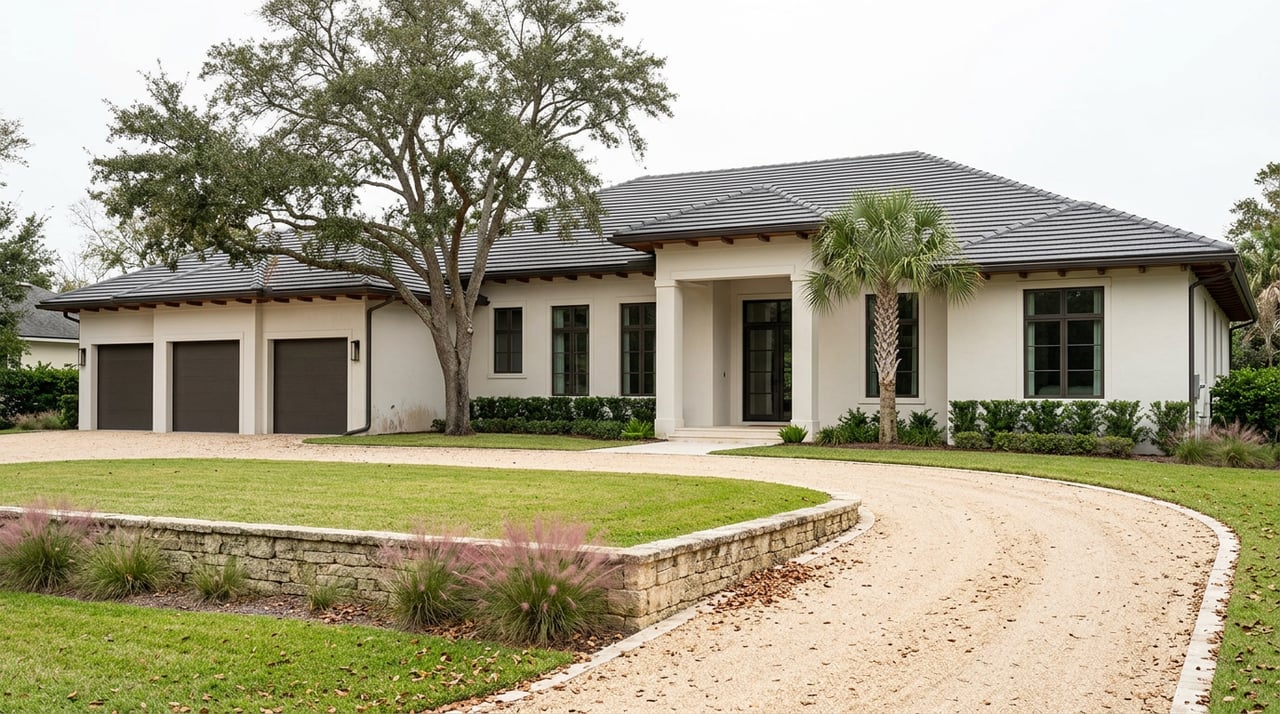
FishHawk Ranch is the community most people picture when they hear the name Lithia, and for good reason. It's the anchor, the one with the trails and the town center and the schools everyone asks about. But Lithia's 33547 zip code stretches well past FishHawk's boundary, and the further out you go, the more the housing stock changes shape.
Here's roughly what you're choosing between:
| Area | Typical Price Range | Housing Character |
|---|---|---|
| FishHawk Ranch | $400K–$800K+ | Master-planned, CDD-governed, resort amenities |
| FishHawk Trails | $350K–$550K | Adjacent to FishHawk, shares its school zoning, separate HOA |
| Buckhorn / CR-672 | $400K–$1M+ | Larger lots, rural living |
| Alafia River Estates / rural Lithia | $400K–$1M+ | Large acreage, equestrian, privacy |
| Boyette Area | $300K–$500K | Established and newer mix |
| Lithia Springs | $300K–$500K | Established area, larger lots |
| Balm Road Estates | $350K–$550K | Master-planned, resort pool, near Riverview |
The master-planned side clusters around FishHawk's infrastructure. The rural side runs along CR-39, Lithia Pinecrest Road, and the corridors near the Alafia River, where lots often run one to ten-plus acres under agricultural zoning, with no HOA and no CDD to send violation letters if you keep horses or store equipment outside.
FishHawk Ranch is governed by a Community Development District that finances and maintains shared infrastructure: roads, stormwater systems, parks, trails, and potable water and sewer service, according to the FishHawk Ranch CDD. The CDD fee that shows up on your tax bill covers two things. One part is debt service, which repays the bonds that built the infrastructure and stays fairly fixed. The other is operations and maintenance, which can shift year to year with the district's adopted budget.
That fee isn't flat across the community. Older sections built in the early 2000s have been paying down their bonds for two decades, so their CDD assessments run lower. Newer sections like Starling carry higher CDD costs because the bond balance is still largely outstanding. Add HOA dues on top, and combined fees across FishHawk typically land between $250 and $500 a month, on top of the mortgage, taxes, and insurance. Depending on which HOA governs your section, that association is managed by either GrandManors or Inframark, and each one sets its own dues and service list.
None of this changes your VA loan process in any meaningful way. Public water and sewer mean the appraiser isn't measuring anything on your property line. The friction here is entirely financial: know which section you're buying into, because the CDD math is different depending on when those bonds were issued.
Cross out of FishHawk's boundary and the infrastructure disappears along with the fees. No CDD, no HOA in most of rural Lithia, and often no paved road either. What replaces the monthly assessment is a private well and a septic system, and that's where a VA loan starts asking different questions.
NewDay USA explains that a VA loan doesn't require a home to connect to public water or sewer; private wells, shared wells, and septic systems are all eligible. The condition isn't the source of your water, it's whether that water and that sewage system are safe. That standard comes from the VA's Minimum Property Requirements, and it's where rural Lithia buyers run into steps that FishHawk buyers never see.
Water testing typically screens for bacteria like coliform and E. coli, since those indicate whether something, often septic effluent, has made its way into the water table. According to LoanPronto, test results are generally valid for 90 days, so timing the sample against your appraisal schedule matters if you don't want a gap between test and closing.
Then there's distance. A VA Loan Network guide says most states set a minimum separation between a well and a septic system, commonly in the range of 50 to 100 feet, specifically because effluent from a drain field can migrate through groundwater and reach a nearby well. The VA defers to whatever the state or county health department requires rather than publishing its own number, but, according to the VA Loan Network, on VA files this frequently surfaces as a 100-foot benchmark that appraisers use to flag a potential problem. If the well and septic sit closer together than local code allows, the appraiser can flag it, and the property doesn't clear the VA's minimum standard until it's resolved.
That distance problem catches more rural buyers off guard than almost anything else in the file, and it disproportionately affects older properties, including those with wells and septic systems installed decades ago, before current separation rules existed. Fixing it isn't cheap. Relocating a well typically runs $5,000 to $15,000. Relocating a septic system carries its own cost. In some cases, a variance from the local health department is possible, but that's a conversation to have with the county, not something to assume.
A full septic inspection isn't automatic on every rural file. It tends to get triggered by one of three things: the appraiser notices a visual concern like standing water or unusually lush vegetation over the drain field, the lender makes it a standing condition for rural purchases, or the property falls under a state or county rule requiring inspection at every real estate transfer. In practice, expect one of those triggers to apply on most homes that aren't connected to public sewer, which means budgeting the time and the cost of a septic inspection into your closing timeline even if nobody's told you it's required yet.
None of this exists for a FishHawk Ranch purchase. Public water and public sewer mean the appraiser has nothing to measure on the ground and no lab results to wait on. The entire diligence chain, water test, distance check, possible septic inspection, only applies once you cross into the acreage side of Lithia.
Lithia's overall market moved fast this year. As of June 2026, the median sale price across the area sat at $565,000, with homes selling in an average of 62 days, a bit quicker than the 63-day average from the year before. But total sales volume was down, with 551 homes sold in that window compared to 653 the year prior.
Faster days on market paired with fewer total sales is the kind of number that looks contradictory until you remember it's blending two different buyer pools. A tighter, faster-moving pool of well-qualified buyers, some of them well-prepared VA buyers who've already lined up their well tests, can post quick sale times even as overall transaction volume cools. The aggregate median doesn't tell you which side of Lithia that speed is coming from, and it doesn't need to, because it isn't measuring one market. It's averaging two.
Does a VA loan require public water and sewer? No. Private wells and septic systems are eligible as long as they meet the VA's safety and sanitation standards during appraisal.
How long does a well water test stay valid? Results are generally good for 90 days from certification, so timing the test against your appraisal and closing dates matters.
What happens if the well and septic are too close together? The appraiser can flag it as not meeting minimum property requirements. Fixes range from a health department variance to relocating the well or septic system, both of which carry real cost and time.
Do CDD fees apply outside FishHawk Ranch? No. Most of rural Lithia, including areas along CR-39, Lithia Pinecrest Road, and the Alafia River corridor, has no CDD and typically no HOA.
Whether you're comparing a FishHawk Ranch listing against a five-acre parcel off CR-672, the fastest way to know what you're actually financing is to ask before you write the offer, not after the appraisal comes back. If you're weighing a VA purchase anywhere in Lithia and want to know which side of that line a specific address falls on, Karena Caputo has walked military families through both. Let's Connect.
Stay up to date on the latest real estate trends.
Every client deserves honest communication, strategic guidance, and dedicated representation. Experience a real estate partnership focused on achieving your goals with confidence.
KARENA CAPUTO
2234 LITHIA CENTER LN VALRICO, FL 33596